
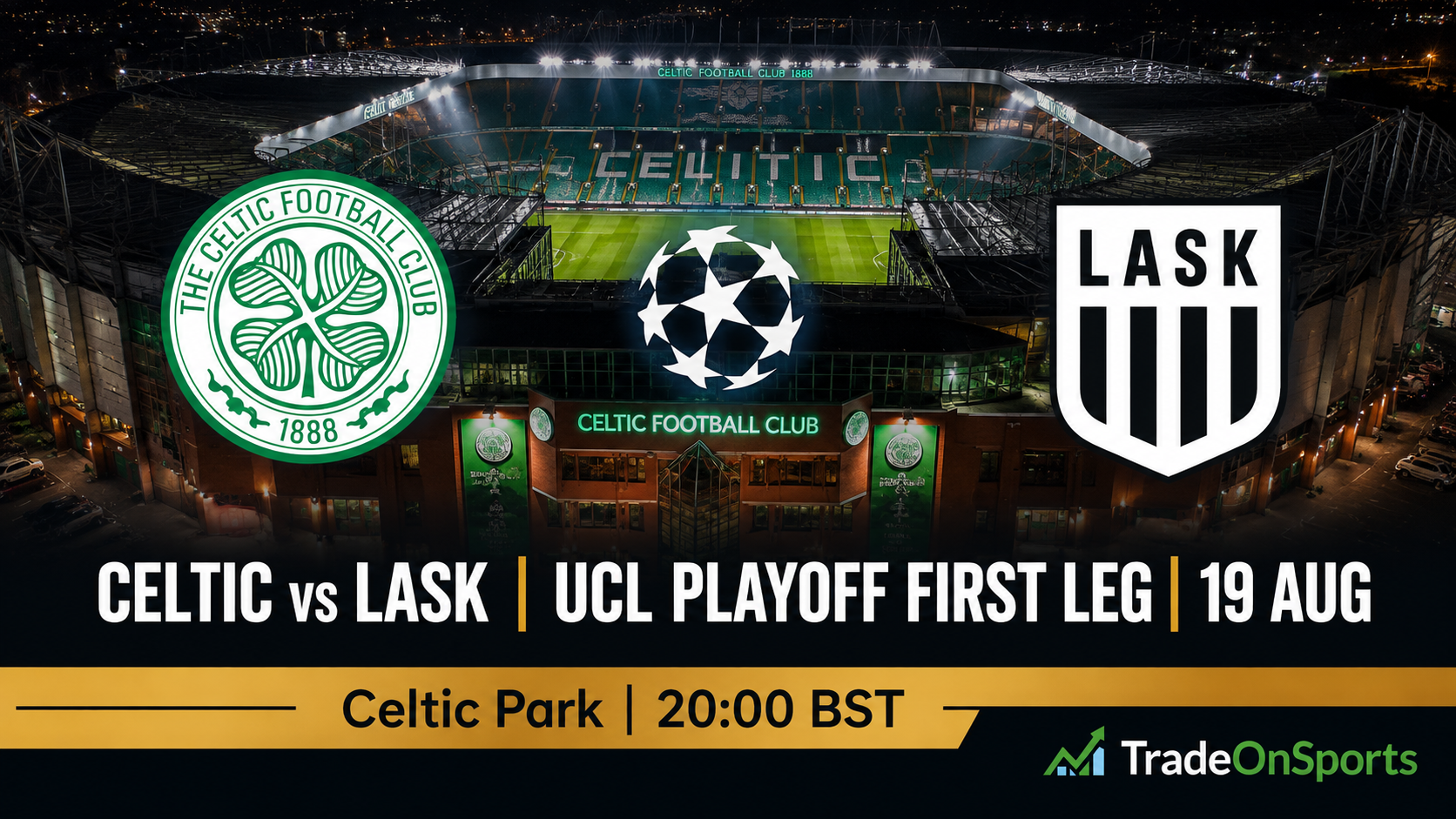
Champions League nights at Celtic Park are something else entirely. The atmosphere, the noise, the sheer weight of what it means to the club and the city, they cannot be manufactured. On Wednesday 19 August, Celtic host Austrian side LASK in the first leg of the UEFA Champions League Playoff round, with a place in the 2026-27 UCL League Phase on the line.
This is as high-stakes as August gets.
What Is the UCL Playoff?
The Champions League Playoff round sits between the qualifying rounds and the competition’s League Phase. Win the tie across two legs and you are in the group stage. Lose, and your European campaign continues in the Europa League group stage.
For Celtic, that distinction is enormous: financially, competitively, and in terms of the footballing spectacle the club’s fans demand.
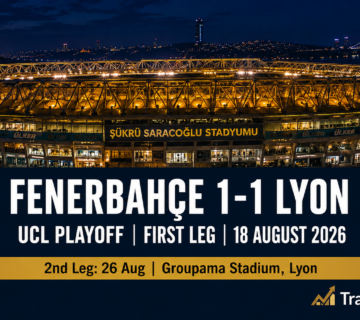
All seven playoff ties in the 2026-27 round have first legs on 18 or 19 August. Celtic’s tie on the 19th puts them alongside high-profile clashes including Fenerbahçe against Lyon, a pairing that signals just how competitive this playoff round is. Celtic’s prize, if they get through, is a seat at the richest table in club football.
The return leg takes place at LASK in Austria on 25 or 26 August.
Celtic: Scottish Champions Chasing the Big Stage
Celtic earned this opportunity by winning the Scottish Premiership in 2025-26, qualifying as Scotland’s top representative in European football. Under Brendan Rodgers, Celtic have built a side that dominates domestically, but the Champions League is where the real test of their quality arrives.
The club’s ambition is clear: reach the UCL League Phase and test themselves against Europe’s elite. The income and exposure from that competition transforms a club’s summer and its ability to compete for talent. For Celtic, qualifying is not just prestige. It is a financial and sporting platform.
Both clubs have started their new domestic seasons but with only a game or two played at most in their respective leagues, standings have no meaningful weight in this European context. The focus is entirely on this two-legged European assignment.
LASK: Austria’s European Representatives
LASK arrive as the Austrian Bundesliga’s representative in this round, which means they have come through their own qualification path to be here. Austrian clubs have a history of making European campaigns uncomfortable for bigger names. They are compact, organised, and experienced at navigating the pressure of high-stakes European qualifying.
LASK will know that Celtic Park is one of the most intimidating atmospheres in European football when the home side are chasing something. That knowledge cuts both ways: it is a challenge to handle, but it also tells you precisely what is required. They will need to keep the match alive heading to the second leg in Austria.
Celtic Park: The Home Advantage
Celtic Park holds around 60,000 supporters and, on a European night, it is full. That matters more in a two-legged tie than people often give credit for.
The noise from a capacity Celtic Park crowd in the opening exchanges regularly forces visiting teams into mistakes. High defensive lines get pressured. Build-up play gets disrupted. Teams that have never experienced it before underestimate it. Teams that have can still be overwhelmed by it.
LASK will need to be disciplined from the first whistle, defend their shape, and look to leave Glasgow with as little damage to the aggregate score as possible. Whether they can hold out will define how the second leg looks.
Tactical Angle: What to Watch
Celtic’s approach under Rodgers is intense, high-energy pressing football with quick transitions. The home side will look to impose the game’s tempo immediately, using the crowd to amplify that pressure in the early stages.
LASK, in the Austrian style, are likely to be structured and hard to break down. Austrian clubs tend to defend deep in these ties and look for transitions of their own. If they can stay level or close in the first 30 minutes, the match becomes more manageable for them.
The key battle is likely to be in midfield. Celtic will want to dominate the ball and create in wide areas. LASK will want to deny space and frustrate. Which structure holds longer will tell you a lot about how the aggregate tie shapes up.
Watch for LASK’s ability to stay organised in the face of the Celtic Park atmosphere. And watch for Celtic’s clinical edge: creating chances is one thing in European football, converting them is another.
The Stakes in Full
Win the tie: Celtic enter the UEFA Champions League 2026-27 League Phase. A place among Europe’s 36-team group format. Multiple home European nights. Prize money that transforms the club’s financial position for the season.
Lose the tie: Celtic drop into the Europa League group stage. Still European football, still significant, but a very different prize.
For LASK, the equation is identical but reversed. Beat Celtic across two legs and they face the biggest clubs in European football. Fall short and they face the same Europa League route.
Both clubs want the same thing. Only one gets it.
Our Lean
Celtic start the tie as favourites by virtue of home advantage, a passionate European night atmosphere, and their status as Scottish champions. LASK are not here by accident and they will be difficult to break down.
The first leg at Celtic Park will likely set the tone. A Celtic win by a goal or two would leave the tie evenly poised heading to Austria. A clean sheet for Celtic would make the second leg very difficult for LASK.
What we do know: Celtic Park on a Champions League night is one of the most compelling environments in European football. Whatever the scoreline, this is worth watching.



No comment